- AI Toast
- Posts
- DeepSeek is back

Welcome to AI Toast!
Here’s what’s on the menu today:
Black Friday AI shoppers reshape holiday spending
DeepSeek one-upped everyone.
Micron plans to pour $9.6 billion in global chip race
Superhero AI Tools
4 ways to build power app
Quick AI Toast: Apple’s new AI head
Total read time: About 5 minutes, perfect for a quick coffee break.

Image Source: Inc. Magazine
U.S. shoppers just set a new online Black Friday record, and AI quietly sat at the center of the action. The numbers look big on their own, but the mechanics behind them matter even more for how people will shop next year.
U.S. consumers spent a record 11.8 billion dollars online on Black Friday, up about 9 percent from last year, driven by discounts and heavier digital traffic.
Adobe’s data comes from tracking roughly 1 trillion visits to U.S. retail sites, giving retailers a detailed view of how people click, search, and buy across the day.
Spending peaked around late morning to early afternoon, hitting more than 12 million dollars per minute at the busiest times.
Mobile devices accounted for more than half of online sales, which pushes retailers to treat phone-based product discovery, content, and checkout as the default experience.
Buy now, pay later use climbed again, with Adobe reporting higher BNPL activity compared to last year as shoppers spread payments to handle tighter budgets.
Retailers leaned on AI for personalized offers, search, and recommendations, while consumers used chatbots and AI shopping assistants to compare prices and surface better deals.
Early data suggests this behavior rolls straight into Cyber Monday, where spending is expected to reach about 14.2 billion dollars, keeping AI-optimized funnels busy through the full holiday window.
Personal Take: The future of commerce is gonna be so interesting. With all the major AI players implementing shopping natively, the experience is up for a drastic change. Over the next few years, most holiday revenue will likely flow through AI-shaped journeys where pricing, recommendations, and timing adapt to each shopper.
A Framework for Smarter Voice AI Decisions

Deploying Voice AI doesn’t have to rely on guesswork.
This guide introduces the BELL Framework — a structured approach used by enterprises to reduce risk, validate logic, optimize latency, and ensure reliable performance across every call flow.
Learn how a lifecycle approach helps teams deploy faster, improve accuracy, and maintain predictable operations at scale.
DeepSeek is back with a serious upgrade. Two new reasoning-first models that now rival GPT‑5 and Gemini 3 Pro in math and coding.
DeepSeek, a Chinese AI startup, has launched two new models: DeepSeek‑V3.2 and DeepSeek‑V3.2‑Speciale, to challenge Gemini and ChatGPT‑class systems.
The V3.2 series are “reasoning‑first models built for agents,” designed for complex problem‑solving and tool‑using workflows.
DeepSeek claims V3.2 matches GPT‑5 performance on general tasks and is now the default model on DeepSeek’s website and app.
The more powerful V3.2‑Speciale is said to match Google’s Gemini 3 Pro in reasoning, especially on hard math and logic problems.
V3.2‑Speciale achieved gold‑medal performance in the 2025 International Mathematical Olympiad (IMO) and International Olympiad in Informatics (IOI), a level previously only seen in top proprietary models.
On pure math benchmarks like AIME and HMMT, V3.2‑Speciale beats both GPT‑5 High and Gemini 3 Pro, and it leads in coding logic on CodeForces.
On the extremely hard Humanity’s Last Exam (HLE) benchmark, V3.2‑Speciale scores higher than GPT‑5 High but still trails Gemini 3 Pro.
Regular users can try V3.2 right now by logging into the DeepSeek chatbot; V3.2‑Speciale is currently available only via API, not in the consumer app.
DeepSeek isn’t just copying OpenAI and Google anymore; it’s carving its own niche in reasoning and agent workflows, which could make it a go‑to for engineers and researchers who need raw problem‑solving power, not just fluent chat.
Personal Take: Developers will win by building focused copilots on top of vision models, not by chasing new models. We’re in a phase where every week another model drops and the “best” title keeps shifting. The real test ahead is whether AI companies converge on shared ways of working and deliver tools that actually serve users, not leaderboard bumps.
See What’s Missing From Your Digital Marketing Strategy

Want to uncover your hidden affiliate marketing potential?
Levanta’s Affiliate Ad Shift Calculator shows you how shifting budget from PPC to creator-led programs can lift your ROI, streamline efficiency, and uncover untapped marketing revenue.
Get quick results and see what a smarter affiliate strategy could mean for your growth.
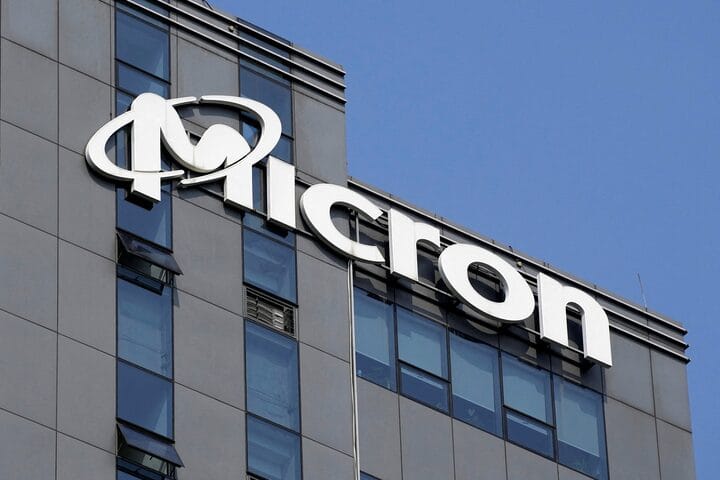
Micron is making a major move in the global chip race, with plans to pour 1.5 trillion yen (~$9.6 billion) into a new AI-focused memory chip plant in Hiroshima.
• The facility will produce high-bandwidth memory (HBM) chips, a critical component powering modern AI systems and data-center infrastructure.
• Construction is slated to begin May next year at an existing Micron site, with shipments expected around 2028.
• Japan’s Ministry of Economy, Trade and Industry is prepared to provide up to 500 billion yen in support.
• The investment is part of Japan’s broader push to revive its semiconductor ecosystem, with generous subsidies aimed at attracting global chipmakers such as Micron and TSMC.
• The government is also backing a separate advanced logic chip plant using IBM technology, further signaling ambitions to reclaim strategic chip manufacturing capacity.
• Surging demand for AI and the data centers powering it continues to fuel the HBM market, now one of the most important memory technologies in the AI hardware stack.
Personal Take: Japan is clearly positioning itself as a serious contender in the AI-era semiconductor landscape. With HBM becoming the lifeblood of AI compute, Micron’s expansion signals both confidence in long-term AI growth and a geopolitical realignment as
Superhero Tools
Taplio: Grow your LinkedIn brand with AI content, scheduling, and analytics.
Wix Studio: Build and scale high‑performing client websites with pro tools and built‑in AI.
Midjourney: Create stunning AI‑generated visuals for concepts, marketing, and design.
Wondershare Filmora: Edit videos fast with easy tools and AI features for polished results.
Genspark: An all‑in‑one AI workspace to write, research, and automate daily tasks.
4 Ways to Build Power Apps
No-Code: Open Microsoft 365 Copilot and use the App Builder agent. Describe your app in plain English (for example, “people can submit ideas and vote”). It generates the app and stores data in a dedicated SharePoint site. Share the app with people or security groups in your organization through Copilot.
Low-Code: Go to make.powerapps.com and start with Plan Designer. Write your problem statement; agents create a plan: Requirements, data model, and technology recommendations. Customize Dataverse tables, relationships, and columns. Generate Canvas Apps and Model-Driven Apps from the plan, then refine UI and logic using Power FX (Excel-like formulas). Use solution context for ALM and enterprise scale.
Vibe Code (AI): Open vibe.powerapps.com. Describe the full‑stack React app you need; the Requirements, Data, Code, and Solution agents generate the plan, data, and React code. Preview, edit, and compare versions; publish to your environment. In Model‑Driven Apps, use Gen Pages (“describe a page”) to v‑code React pages connected to your tables.
Pro-Code: Build a React app in Visual Studio Code. Connect to Power Platform’s connector ecosystem (e.g., SharePoint, Dataverse), run locally, then deploy as a Code App to your environment. Use the pack code push command to ship changes. Manage everything as enterprise solutions.
Quick AI News Bites
Apple's AI chief John Giannandrea is stepping down after leading the company's AI division since 2018. He will remain as an advisor until his retirement in spring 2026. His replacement is Amar Subramanya, a Microsoft exec with extensive Google experience, signaling a strategic hire for Apple's AI future.
OpenAI and Google have imposed new daily usage limits on their AI content generation tools due to high demand. Free users of OpenAI’s Sora app can now generate only six videos daily, while Google’s Nano Banana Pro users are limited to two images per day without a subscription. These limits highlight the immense computational resources required for AI content creation.
Jorja Smith’s label seeks royalties. They say Haven’s “I Run” used an AI clone of her voice. The song was pulled, then re‑released with new vocals, and the label wants compensation and clear AI labelling.
Perplexity’s downloads fell 80% after paid promos and the Airtel India free Pro deal. ChatGPT’s India-only GPT Go launch erased Perplexity’s edge, and retention stayed weak. In a commoditised AI market, paid growth without real habit formation collapses fast.
Boost revenue and gain new customers by partnering with us
Reach over 35K AI enthusiasts with your product.
Join our newsletter to connect with tech professionals, investors, engineers, managers, and business owners worldwide. DM now!
Got feedback, a story worth toasting, or a wild tech question? I’d love to hear from you; just reply, or find me on X.
Cheers,
— Poonam Soni